
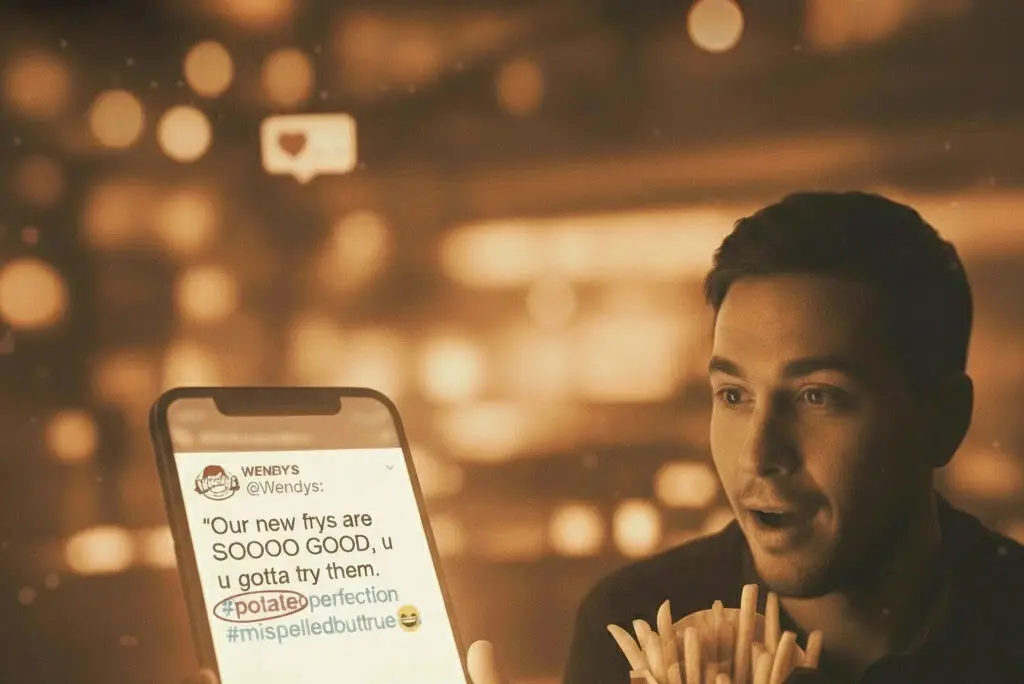
The internet loves a good origin story, especially when it involves corporate social media gone rogue. But here's the twist that most marketing case studies get wrong: Wendy's legendary social media dominance didn't start with a misspelled tweet from their brand account. It began with something far more powerful: a social media manager who refused to let stupidity slide.
January 2017. A lazy Tuesday evening. Amy Brown is on her couch in pajamas, half-watching Law & Order reruns while monitoring Wendy's Twitter account. Then she spots it: a customer's particularly dim-witted jab at Wendy's "fresh, never frozen" meat policy. The comment was so poorly constructed, so confidently wrong, that Brown couldn't resist.
What happened next would rewrite the playbook for brand personality on social media.
The Moment That Changed Everything
Most brands would have ignored the comment or responded with corporate-speak about quality standards and customer satisfaction. Brown took a different approach. She fired back with a sarcastic response about refrigerators that perfectly skewered the customer's logic while defending Wendy's positioning.
"I yelled for my boyfriend to come into the room, 'Look, look how dumb this tweet is,'" Brown later recalled. "We laughed; I wrote back something snarky about refrigerators. The whole thing took five minutes and minimal brainpower on my part before I turned my attention back to the old episode of Law & Order that I hadn't even bothered to pause."
Five minutes. Minimal brainpower. Maximum impact.
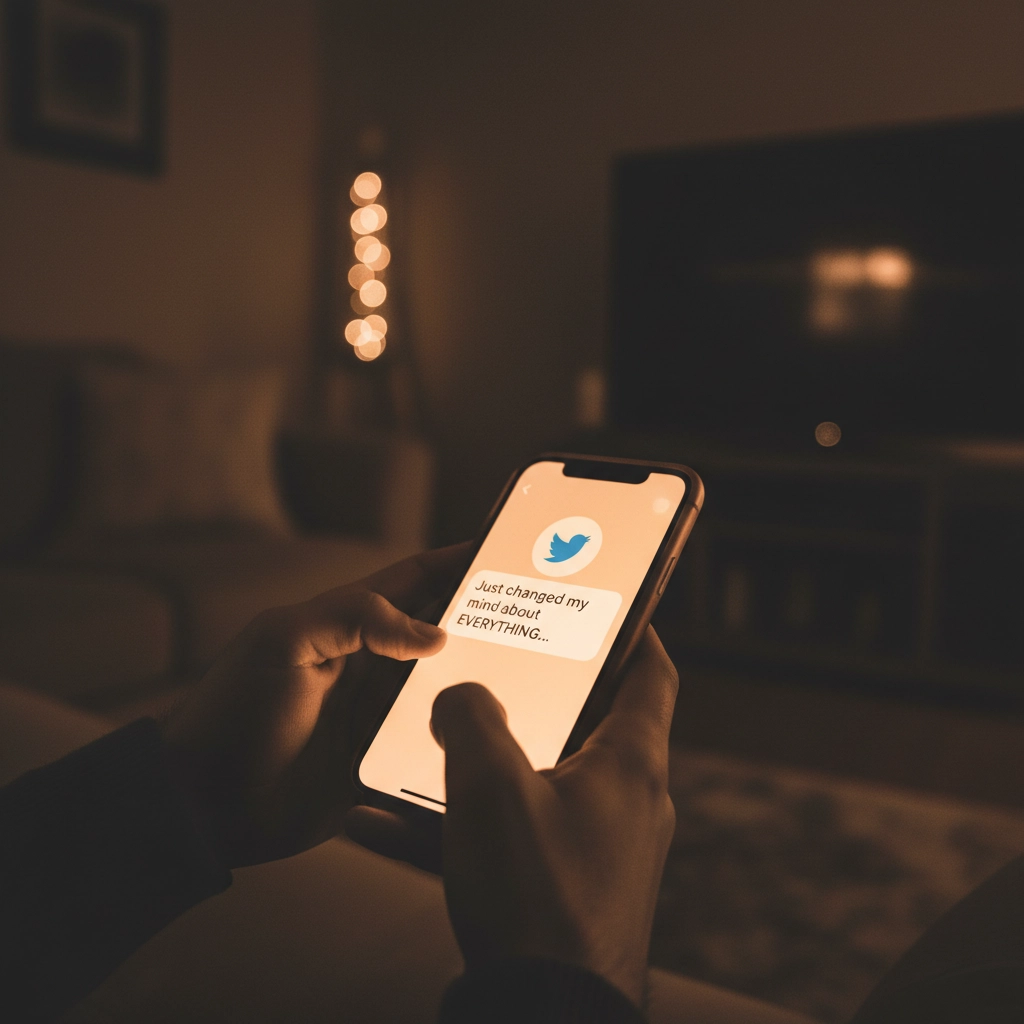
The response wasn't planned by committee, focus-grouped, or approved by twelve layers of management. It was authentic, immediate, and devastatingly effective. Within hours, the tweet was spreading across platforms like wildfire.
From Couch Commentary to Cultural Phenomenon
Here's where the story gets interesting from a strategic perspective. The viral moment wasn't the result of sophisticated social listening tools or elaborate content calendars. It was pure human instinct: a social media manager who understood her audience well enough to know they'd appreciate calling out nonsense.
When a writer at Upworthy shared Brown's tweet to their personal account, the momentum exploded. Suddenly, everyone wanted to know: who was running Wendy's Twitter, and how could they be this savage?
Anderson Cooper re-enacted the exchange on CNN. Brands started trying to replicate the success with varying degrees of cringe. Social media managers everywhere suddenly had executives asking, "Can we be more like Wendy's?"
But here's what most missed: this wasn't a lucky accident. It was the inevitable result of giving the right person the freedom to be human.
The Strategic Genius Behind the Snark
Smart brands recognized what Wendy's stumbled into: or perhaps strategically cultivated: was pure gold. The fast-food market is brutally competitive, with massive players spending millions on traditional advertising. How do you break through when McDonald's and Burger King dominate mindshare and budgets?
You become the brand with personality.
Wendy's transformation from corporate Twitter account to social media legend didn't happen overnight, but it happened intentionally. Following the viral moment, they doubled down with their "Roast" campaign, systematically targeting competitors and customers with precision-crafted burns that walked the line between funny and brutal.

The strategy was brilliant in its simplicity: while competitors focused on product features and promotional offers, Wendy's focused on entertainment value. Every tweet became potential content for other platforms. Every roast generated earned media worth hundreds of thousands in traditional advertising value.
The Risks Nobody Talks About
Let's address the elephant in the room: this approach terrifies most marketers, and rightfully so. Giving your social media team permission to be sarcastic and confrontational is like handing a loaded weapon to a teenager. The potential for catastrophic brand damage is real.
Wendy's faced their own challenges. The brand later had to navigate controversy when their Pepe the Frog response triggered backlash from those who recognized the meme's association with white nationalist symbols. The line between edgy and offensive isn't always clear, and social media moves too fast for perfect judgment calls.
But here's what separates successful brand personality from social media disasters: understanding your audience deeply enough to know where the boundaries are.
Why Most Brands Fail at Personality
The Wendy's success spawned thousands of imitators, most of whom missed the fundamental elements that made the original work.
Generic snark doesn't build brands. Forced personality feels exactly that: forced. The magic wasn't in the individual tweets; it was in the consistency of voice and the genuine understanding of what their audience found entertaining.
Most brands trying to replicate Wendy's success make these critical mistakes:
They mistake meanness for humor. Wendy's roasts were clever, not cruel. The best responses showed wit rather than spite.
They lack authentic voice. Corporate committees can't manufacture personality. The voice has to feel real because, in Wendy's case, it was real: it was Amy Brown being herself within brand guidelines.
They don't commit fully. Half-hearted attempts at edgy content just look awkward. You're either the snarky brand or you're not.

The Broader Implications for Brand Strategy
What Wendy's proved is that in an attention economy, personality beats polish. Traditional marketing wisdom says stay safe, stay on-message, stay consistent. Social media demands authenticity, even if that means occasionally looking human.
The most successful brands today understand that social media isn't just a broadcasting channel: it's a conversation platform. And conversations require personality, opinions, and occasionally, the willingness to call out stupidity when you see it.
This shift requires fundamental changes in how brands approach content creation, approval processes, and risk tolerance. It means hiring social media managers who understand your brand voice intuitively, not just operationally.
Lessons for Marketing Leaders
The Wendy's phenomenon offers several strategic insights that extend far beyond fast food:
Speed beats perfection in social media. Brown's five-minute response time was crucial. By the time most brands would have crafted, reviewed, and approved a response, the moment would have passed.
Authenticity requires autonomy. You can't create genuine brand personality through committee approval processes. The best social media voices come from individuals who deeply understand the brand but have freedom to express it.
Risk tolerance is a competitive advantage. Brands willing to push boundaries and occasionally face criticism will capture more attention than those playing it safe.
Consistency builds trust. Wendy's success wasn't about one viral tweet: it was about maintaining a consistent voice that audiences learned to expect and anticipate.
The Wann Agency Difference
At The Wann Agency, we understand that building authentic brand personality requires more than copying successful tactics. It requires deep understanding of your audience, clear brand positioning, and the strategic courage to let your voice be heard above the noise.
We don't help brands become the next Wendy's: we help them become the first version of themselves. That means identifying what makes your brand unique, understanding how your audience communicates, and developing voice guidelines that feel natural rather than forced.
The difference between viral moments and lasting brand evolution is strategy. While others chase trends, we build foundations that support authentic expression over time.
Ready to discover what your brand voice sounds like when it's freed from corporate-speak and committee approval? The conversation starts with understanding who you are when nobody's watching: and having the confidence to let that personality show.
SEO Tags
branding agency, marketing agency, brand storytelling, visual branding, creative design services, marketing leadership, business marketing tools, marketing support, strategic marketing guidance, social media branding, brand personality, brand voice, brand engagement, viral marketing, social media strategy, Wendy's, marketing case study, real-time marketing, brand authenticity, conversational marketing